


Creative Visualization
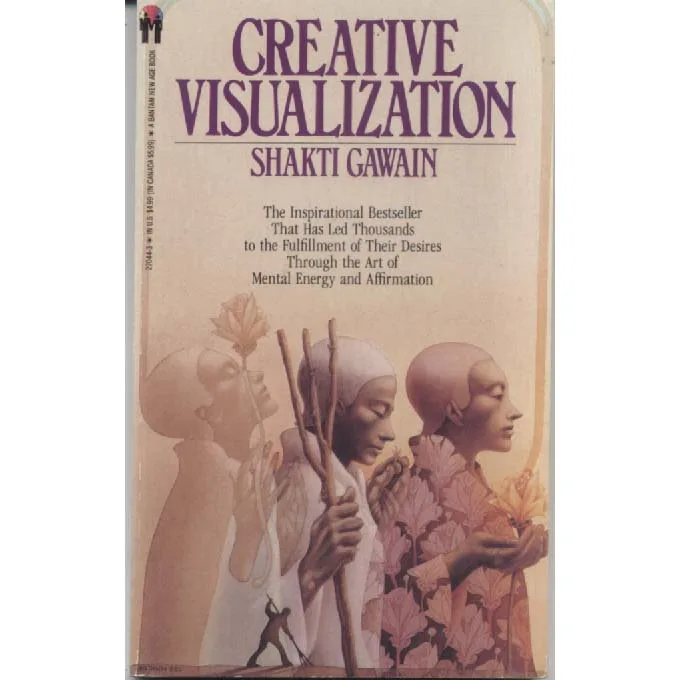
Publisher: Bantam
Format: Paperback
ISBN: 9780553241471
Creative Visualization (1982) by Shakti Gawain
Bantam
ISBN: 9780553241471
Condition: Good
Before vision boards colonised social media, before motivational influencers began photographing notebooks beside cups of coffee, and long before anyone started describing themselves as a “manifestation coach”, Shakti Gawain was already encouraging people to sit quietly and imagine what they actually wanted.
Creative Visualization became one of the classic books of the modern self-development movement, built around the deceptively simple idea that imagination can be used deliberately rather than merely allowing it to spend three hours inventing disasters that probably will not happen.
Gawain’s method involves forming clear mental images of goals, experiences and desired changes, then reinforcing those images through relaxation, affirmations and repeated visualisation. The basic argument is that our thoughts and expectations influence the way we behave, what we notice and ultimately what we are capable of creating in our lives.
At its most practical, this makes considerable sense.
Athletes rehearse performances mentally. Musicians imagine difficult passages before playing them. Speakers run through presentations in their heads. Almost everyone has mentally practised an awkward conversation while washing up, usually producing an imaginary version in which they are dramatically more articulate than they eventually turn out to be.
Gawain simply takes the principle and applies it much more broadly.
Want something to change?
Imagine the result clearly.
Picture yourself achieving it.
Notice the thoughts that immediately announce why it is impossible.
Then work on those as well.
The book combines practical exercises with the spiritual outlook that became characteristic of the human-potential movement of the 1970s and 1980s. There are affirmations, meditations and discussions of personal energy alongside straightforward suggestions for identifying goals and developing more constructive patterns of thought.
Readers who prefer their psychology accompanied exclusively by laboratory coats may occasionally raise an eyebrow.
Readers who have ever noticed that expecting to fail can be a remarkably efficient way of preparing to fail may find rather more to recognise.
One reason Creative Visualization became so influential is that Gawain writes accessibly. There is no requirement to retire to a mountain, purchase ceremonial robes or spend seventeen years studying under somebody called Master Sunflower.
You can simply try the exercises.
Much of the book concerns learning to picture things vividly: not merely saying “I would like a better job”, for example, but imagining what that better situation would actually look and feel like. What are you doing? Where are you? How do you feel? What has changed?
Essentially, it asks the reader to provide the brain with something more useful than the traditional instruction of “sort everything out somehow”.
There is also considerable emphasis on affirmations: positive statements designed to challenge habitual assumptions and encourage different ways of thinking. These became enormously fashionable in later self-help literature, although Gawain was advocating them decades before social media discovered that motivational sentences look particularly convincing when printed over photographs of sunsets.
Inevitably, some readers will approach the more metaphysical elements with varying degrees of enthusiasm. Creative Visualization emerged from an era particularly comfortable with ideas about consciousness, universal energy and personal transformation.
But beneath that unmistakably New Age surface lies an enduring psychological idea: the pictures people repeatedly create in their minds can influence their confidence, motivation and behaviour.
Visualise yourself attempting something successfully and you may be more inclined to attempt it.
Visualise catastrophe continuously and you may instead become extremely well prepared for disasters that never occur.
The book therefore occupies an interesting place between spirituality, psychology and practical self-development. It is not simply about wishing very hard until a yacht appears outside.
Despite what several decades of increasingly enthusiastic manifestation literature might occasionally suggest.
It is about consciously directing attention towards possibilities rather than allowing ingrained fears and assumptions to dominate every decision.
This 1982 Bantam edition also has considerable period charm. It comes from the earlier wave of modern personal-development literature, before the entire industry acquired podcasts, online courses, subscription plans and people explaining abundance from hired Lamborghinis.
Here the equipment required is considerably simpler.
A book.
Some imagination.
And preferably somewhere quiet to sit.
Whether you regard creative visualisation as a spiritual practice, a motivational technique or simply organised daydreaming with objectives, Gawain’s little classic remains an intriguing and remarkably influential guide to using the imagination more deliberately.
This copy is in Good condition, suggesting that several previous owners may already have visualised themselves finishing it successfully.
Available from Crappy Old Books, where we have been visualising enormous commercial success for some time and remain cautiously optimistic.
Keep browsing: See more Self-Help books Other books by Shakti Gawain
